Why Bicycle Gears Change the Work of a Pedal Stroke
Bicycle gears change how far the wheel travels with each pedal turn, helping you choose a comfortable rhythm for hills, flats, and changing pace.

You reach a gentle rise, keep the same pressure on the pedals, and suddenly each turn feels heavy. Bicycle gears let you change how far the wheel moves with each pedal turn, so the same stretch of road can call for a different effort and rhythm.
A gear does not make a hill disappear or create energy. It trades distance traveled per pedal revolution for how readily the pedals turn. Once that trade is clear, shifting becomes a response to your legs and the road rather than a guess at the right setting.
What changes when you shift gears?
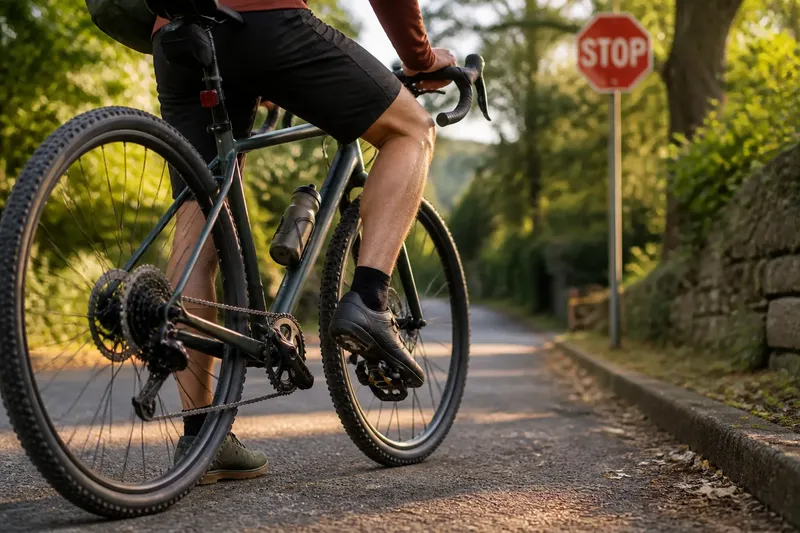
On a typical derailleur bicycle, the chain runs between toothed rings at the front, attached to the pedals, and sprockets at the rear, attached to the back wheel. The front rings are called chainrings; the rear sprockets together are the cassette or freewheel. A shifter moves the chain to a different pairing.
A large front chainring paired with a small rear sprocket moves the rear wheel farther with each pedal revolution. The pedals resist more strongly, so this is a harder gear. It can suit a stretch where you can carry speed.
A smaller front chainring or larger rear sprocket moves the rear wheel less per pedal revolution, making the pedals easier to push. This is a lower, or easier, gear. It can help when a slope, headwind, or slower pace makes a harder pairing difficult to turn.
Gearing changes how your effort is applied, not the effort needed to move you and the bicycle forward. The useful question is whether you can turn the pedals smoothly without straining or spinning without control.
How can you read the gear controls?
Identify what your bicycle’s controls do before you need a quick shift. Many bicycles have one shifter for the front derailleur and one for the rear, but layouts differ. Look for arrows or gear displays, then make a small shift while pedaling gently in a safe, open place and notice the result.
On many bikes, shifting toward a larger rear sprocket makes pedaling easier; shifting toward a smaller one makes it harder. At the front, moving to a smaller chainring usually makes the gear easier, while moving to a larger chainring makes it harder. Lever directions are not universal, so learn what your own controls do instead of relying on a rule about which way to push.
A bicycle with one chainring still has easier and harder choices at the rear. An internally geared hub changes ratios inside the rear hub, often through its own shifter. The mechanisms differ, but each changes the relationship between pedal turns and wheel movement.
When should you shift for a hill or a change of pace?
Shift before the pedals become difficult to turn. As the road tilts upward, move to an easier gear while you can still pedal steadily. If you wait until you are pushing hard, the chain may be under substantial force and shift roughly; easing pedal pressure briefly as you shift can help it move cleanly.
When the road levels or descends, a climbing gear may leave your legs turning too quickly for the pace. Shift harder a little at a time rather than making a large jump and forcing the pedals. Wind, fatigue, and the speed you want to carry can also change which gear feels suitable on a flat road.
There is no single cadence that suits every rider or moment. Notice whether you are pressing heavily on each downstroke, turning with control, or spinning so quickly that you cannot settle into the movement. Shift one gear, let the change register, and decide whether another adjustment is needed.
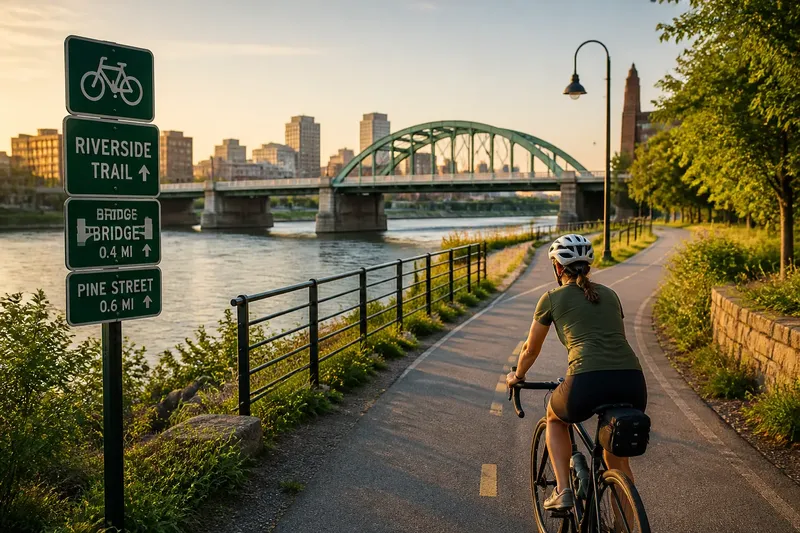
Say you are on a level bike path in a harder gear, with firm but smooth pedal turns, and see a short rise ahead. You shift one click toward an easier rear sprocket before the path climbs and soften your pedal pressure as the chain moves. On the rise, the pedals should turn more readily, though each turn carries you less far; once the path levels, you can shift harder if your legs begin to spin freely.
What do the front and rear gears contribute?
Rear shifts usually make smaller changes, which makes them handy for adjusting to a changing grade or pace. On many derailleur systems, the front chainrings create broader changes. You might use a smaller ring for a sustained climb or relaxed pace and a larger one when the terrain is easier and you want a harder range.
Not every possible combination is a good one. On many derailleur bicycles, avoid pairing the largest front chainring with the largest rear sprocket, or the smallest front chainring with the smallest rear sprocket. These extreme cross-chain positions angle the chain sharply and can cause noise and wear. A nearby combination may give a similar feel with a straighter chain line.
When changing the front chainring, keep the pedals moving and ease your pressure as the chain shifts. A front change can be more noticeable than a rear click, so anticipate it before you are pushing hard. If the chain skips, makes persistent noise, or will not move into gear, do not force the shifter; ask a bicycle mechanic to inspect the adjustment.
How do gears respond to terrain and pace?
A climb generally calls for an easier gear because gravity increases the force you must overcome uphill. A headwind can also make pedaling feel harder on level ground. A lower gear lets you turn the pedals with less force per stroke, while requiring more turns to cover the same distance.
On a descent or a fast, open stretch, an easier gear may let your legs spin without adding useful pressure. A harder pairing gives more wheel movement per pedal turn, so you can apply force at a higher road speed. If the bicycle is already moving at a comfortable pace, you do not have to keep pedaling.
Stops and starts change the choice again. If you expect to slow for a crossing or tight turn, shift easier while you are still moving and pedaling lightly. Starting in a very hard gear can make the first push stubborn; an easier starting gear can help you set off smoothly, then you can shift harder as your pace builds.
Why can the same gear feel different?
A familiar pairing can feel easy on a level path and demanding on a slope because the bicycle is working against different forces. Your pace matters too: a gear that suits a steady ride may feel too hard after you slow to follow a group or move through a crowded path.
Comfort is another useful signal. If you brace your shoulders, press hard through each stroke, or lose a steady motion, try an easier gear. If your legs turn rapidly with little resistance, try a harder one. Neither sensation means the gear is right or wrong for every rider.
For a new rider, a smooth, repeatable pedal stroke is a practical aim. A low gear is not a sign of weakness, and a high gear is not automatically more efficient. Choose according to the road and pace you have in front of you.
What gear questions come up on a ride?
Should I change gears while standing still?
On a derailleur bicycle, the chain generally needs to be moving to shift, so change gears while pedaling rather than waiting until you have stopped. If you are already stopped in a hard gear, start gently and shift once the pedals are turning, easing pressure as the chain moves.
Can I shift several gears at once?
Some shifters allow multiple rear shifts, but a large change can feel abrupt if the chain is under force. Make smaller changes as the terrain asks for them, and give the chain a moment to settle before shifting again.
Why does my bicycle make noise after a shift?
A brief sound as the chain moves between sprockets can occur, but ongoing clicking or rubbing may mean the chain is not aligned cleanly or the drivetrain needs attention. Check that you have selected a sensible gear combination; if the noise continues, ask a bicycle mechanic to inspect the bicycle.
How do I know whether to shift up or down?
If each pedal stroke feels heavy, shift to an easier gear; if your legs are turning too freely for the pace, shift to a harder one. Make one change, keep pedaling smoothly, and judge the result before adjusting again.
How can you make the next shift feel natural?
On your next ride, notice a change before it becomes urgent: a rise, a headwind, a slowing group, or a stretch where your legs begin to spin. Shift while pedaling lightly, then check whether the new gear lets you keep a steady stroke. That pause to listen to the pedals can teach you how your bicycle responds.
Keep the central trade in mind: a harder gear moves the wheel farther per pedal turn and asks for more force; an easier gear moves it less and makes the pedals easier to turn. Bicycle gears give you options for adjusting each stroke to the road, but the same pairing can feel different as slope, wind, speed, and rhythm change.