Flat Pedals or Clip-In Pedals: Two Different Connections
Flat pedals or clip-in pedals change how your shoes meet the bike. Compare entry, release, foot placement, and pedaling feel to choose what suits you.
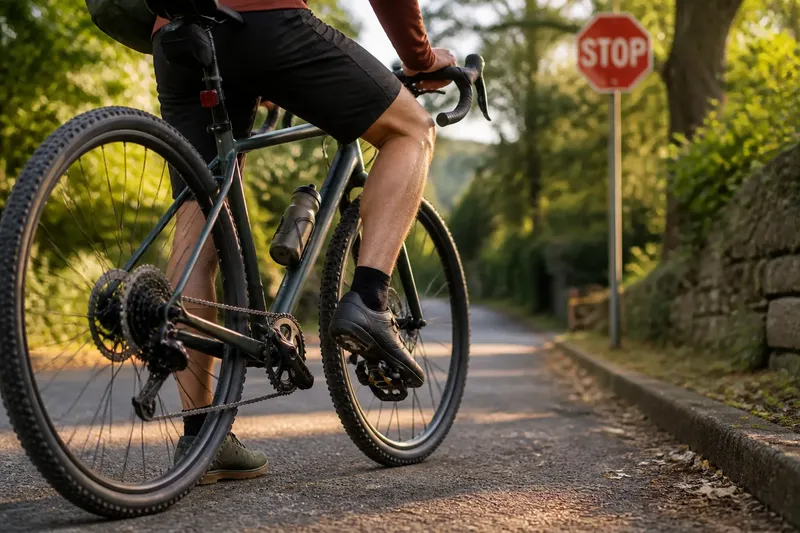
At a stop sign, one rider can put a foot straight down while another turns a heel to release a shoe. That small difference captures the choice between flat pedals or clip-in pedals: one leaves the foot free to lift away, while the other attaches a compatible shoe to the bicycle.
Neither connection dictates how a rider must ride. The useful comparison is how each feels through ordinary moments: mounting, stopping, adjusting foot position, and pedaling along. These six differences can help you decide which arrangement suits your routes and habits.
1. How does each pedal hold your foot?
A flat pedal has a broad platform, often with a textured surface or small pins that help a shoe stay put. Your foot rests on top, and you can lift it away without operating a release. A regular sneaker can work, though a firmer sole may feel more stable than a soft, flexible one.
A clip-in pedal uses a mechanism that engages a cleat attached to the sole of a compatible cycling shoe. The cleat and pedal connect when you press them together; a deliberate heel movement releases them. Despite the name, the shoe is not held by a toe cage, and the mechanism is different from a strap that wraps around the foot.
Some flat pedals have a more pronounced grip than others, while clip-in systems differ in cleat design and release feel. A mountain-bike-style system often uses a recessed cleat that is easier to walk on than a protruding road-style cleat. Check the shoe and pedal maker’s compatibility guidance before choosing parts.
2. What changes when you start or stop?
With flat pedals, starting is straightforward: place a foot on a platform and begin pedaling. At a stop, your foot can come off in any direction. That freedom can be reassuring in traffic, on a steep driveway, or anywhere a quick foot-down feels useful.
Clip-in pedals add a small routine. A rider engages one shoe, starts moving, then connects the other; before stopping, the rider releases a shoe in advance. Once familiar, those motions can become ordinary, but they still ask for attention, especially during a sudden stop or an awkward start on a slope.
Say you are choosing a pedal setup for a neighborhood route with frequent crossings. If you imagine using a flat pedal, you can put a foot down immediately at each stop. If you imagine a clip-in system, you might practice release and re-entry in a quiet, open area before taking that route; the observable aim is to make the movements familiar enough that they do not compete with watching the road.
3. How much freedom do you have to place a foot?
On a flat pedal, you can shift your foot forward or back, angle your toes, or briefly lift and reset your shoe while rolling. That flexibility can help a rider settle into a comfortable position or make a small adjustment when a foot feels misplaced. The tradeoff is that the foot can also drift if the platform is slippery or the shoe’s sole does not grip it well.
A clip-in cleat gives the foot a more repeatable position relative to the pedal. Many systems allow some side-to-side movement while engaged, often called float, but the amount and direction depend on the cleat. A fixed connection may feel more settled to one rider and too restrictive to another; cleat position and shoe fit affect that impression.
Foot placement is not a contest between precision and carelessness. A flat pedal permits frequent adjustment; a clip-in setup makes the engaged position more consistent. Either can feel comfortable when the shoes, stance, and riding posture suit the rider.
4. Why does pedaling feel different?
With flats, pressure is most obvious where the shoe meets the platform. Riders can press down and can also lift a foot away at any time. How much grip and support they feel depends on the pedal’s shape, its surface, the shoe sole, and where the foot rests.
With clip-in pedals, the shoe stays connected through more of the pedal’s rotation. Some riders notice a steadier connection as the pedal rises; others mainly notice that the foot stays in place. This does not mean a rider must pull upward on every stroke, nor does attachment by itself make pedaling feel effortless.
The shoe matters in both cases. A flexible sneaker on a small platform can feel different from a cycling shoe with a stiff sole, while a stiff shoe designed for cleats may feel awkward on a narrow flat pedal. Think about the complete shoe-and-pedal pairing rather than treating the pedal as an isolated part.
5. What should you consider beyond the ride?
Flat pedals usually make it easier to walk normally in everyday shoes, which can be convenient for errands or a ride that includes stops away from the bike. Clip-in shoes vary: recessed cleats can make walking more manageable, while exposed road cleats may be less comfortable on hard floors and can feel slippery. If walking is part of the day, consider the shoe as well as the pedal.
Changing between systems can also mean changing shoes and, for clip-in pedals, fitting compatible cleats. That is a practical commitment, not a measure of how serious a cyclist is. A rider who already owns suitable shoes may find the switch simpler than someone who wants one pair for biking, walking, and work.
For a first impression, a bike shop may be able to show how a particular pedal engages and releases, or let you handle the mechanism off the bike. Avoid trying to learn the motion in a crowded or unpredictable place; a calm setting gives you room to focus on the movement.
6. Which pedal questions are useful to ask?
Can you ride clip-in pedals without clipping in?
Some clip-in pedals have a platform on the opposite side or a broader body that can accept an ordinary shoe, but this varies by design. Check the specific pedal’s intended use rather than assuming it will feel stable with any footwear.
Are flat pedals only for beginners?
No. Riders may choose flats because they value quick foot-down access, walkable shoes, or freedom to reposition a foot. The choice describes a connection, not a rider’s experience or ability.
Do clip-in pedals keep every shoe position fixed?
They hold the cleat in the pedal, but some systems allow controlled movement, and the fit can differ with cleat placement and shoe shape. The connection feels more repeatable than a flat platform without necessarily being completely rigid.
Can you switch pedal styles later?
Many bicycles can use either style if the pedal threads and crank are compatible, but the change may also require different shoes or cleats. A bicycle shop can help confirm compatibility if the parts or fitting are unfamiliar.
Choose the connection that fits your ordinary rides
Flat pedals or clip-in pedals are best compared by the moments you will actually encounter: getting away from a stop, setting a foot down, shifting position, and walking after the ride. If instant freedom to remove a foot matters most, flats offer that directly. If a consistent shoe-to-pedal connection appeals to you and you are willing to learn its release motion, clip-ins may feel more natural.
There is no need to make the choice a permanent identity. Notice which tradeoffs matter on your usual rides, then choose shoes and pedals that work together. Comfort, predictable handling, and confidence at stops are more useful guides than what another rider happens to prefer.